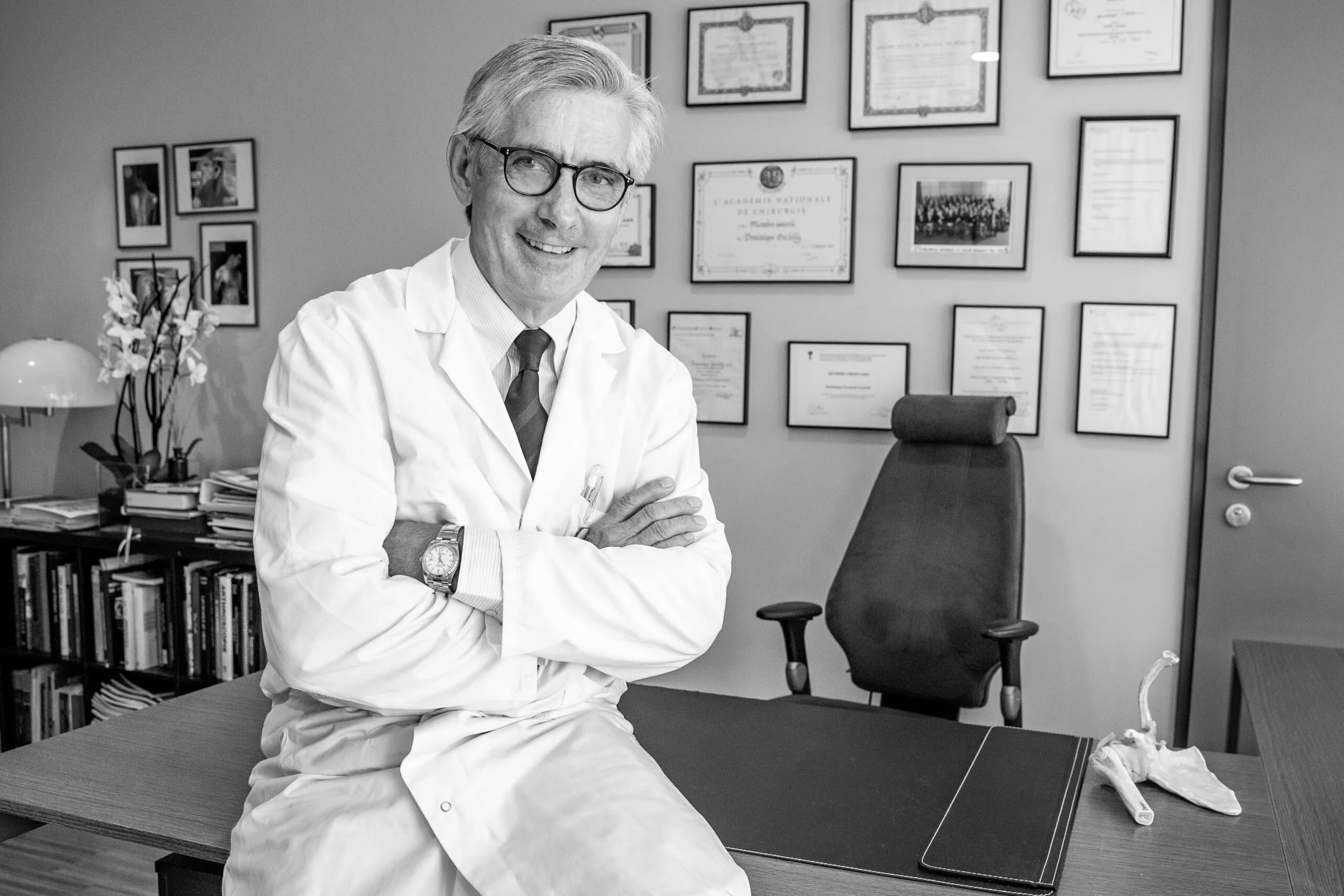
Dr. Dominique-François Gazielly
Orthopaedic Surgeon
Shoulder Specialist
Orthopaedic Surgeon
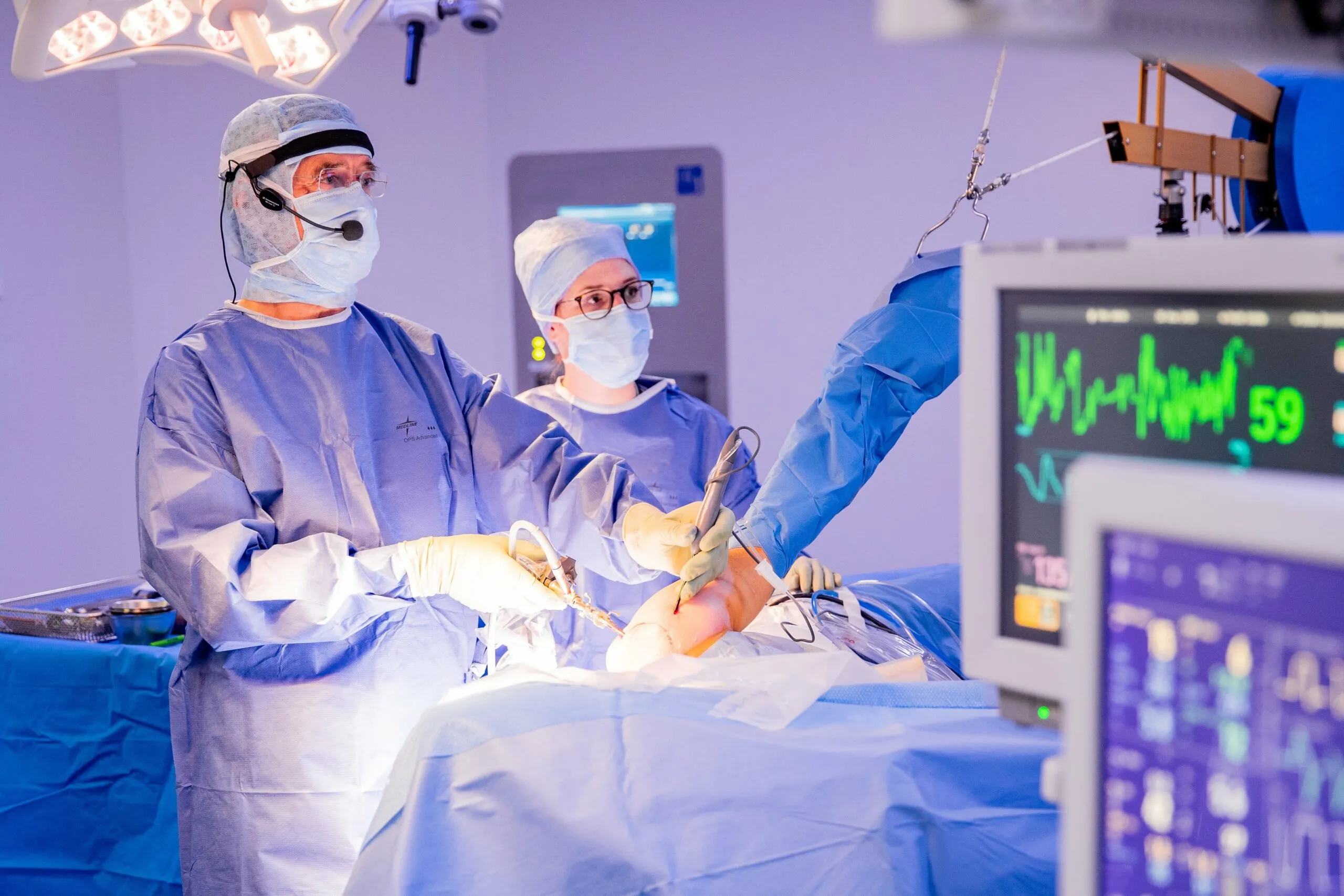
For 40 years, I have devoted my professional life as an orthopaedic surgeon to the shoulder joint.
Of the 24,000 shoulders seen in consultation, 8,000 were treated surgically, mainly by arthroscopic microsurgery. The others were "cured" or "stabilised" through rehabilitation.
Introduction
Over 40 years of experience
My approach to the patient, as an orthopaedic surgeon specialising in the shoulder, rests on 2 fundamental principles:
- Establishing a diagnosis
- Explaining to the patient
It takes 5 years to learn how to operate on a shoulder.
– Dr D.F Gazielly
It takes 10 years to learn how to operate on a shoulder well.
It takes 20 years to learn when not to operate on a shoulder…
Introduction
Without a precise diagnosis, there is no effective treatment.
In medicine, diagnosis is an essential intellectual process.
This is especially true for the shoulder, a complex joint whose injuries can involve the bone, cartilage, tendons or ligaments.
With a precise diagnosis, we are able to offer an effective solution to the patient who comes to see us.
For 40 years, my diagnosis has rested on 3 successive steps: listening, clinical examination of the patient, and specific imaging.
 01. Establishing a diagnosis
Establishing as precise a diagnosis as possible of the underlying lesion, by listening to the patient and through a scheduled clinical examination, complemented by specific imaging.
 02. Explaining to the patient
Explaining to the patient the different therapeutic options, which may not be exclusively surgical depending on their age, medical history and functional demands.